Learn
Practise the work, submit it, and get it back graded against a rubric that names what it is measuring.
Five kinds of practice
Practise the thing you actually have to do
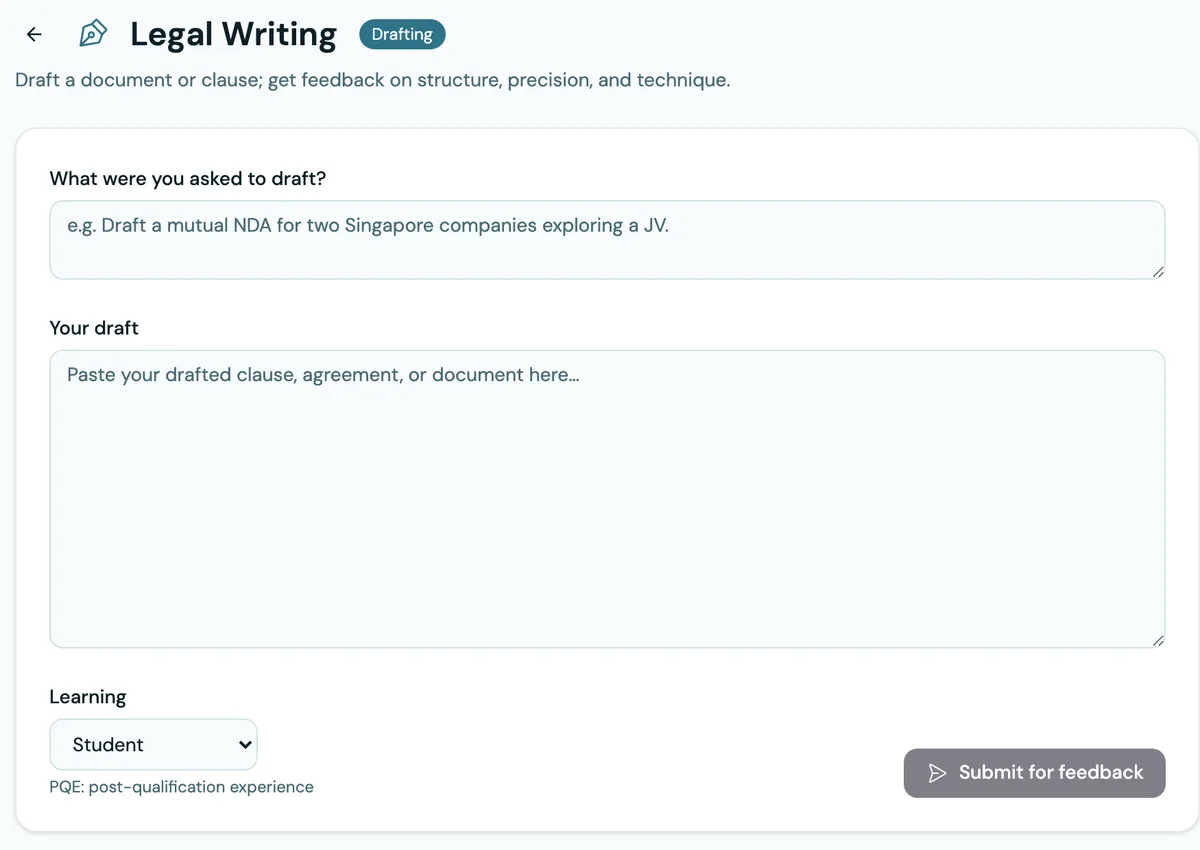
Legal writing, completed staff work, hypothetical analysis, legal essays and cross-examination, each with its own rubric. Describe the task, submit your attempt, and declare the level you are working at - student, junior counsel, or senior - so the grading is calibrated to the standard you are being held to.
Graded, dimension by dimension
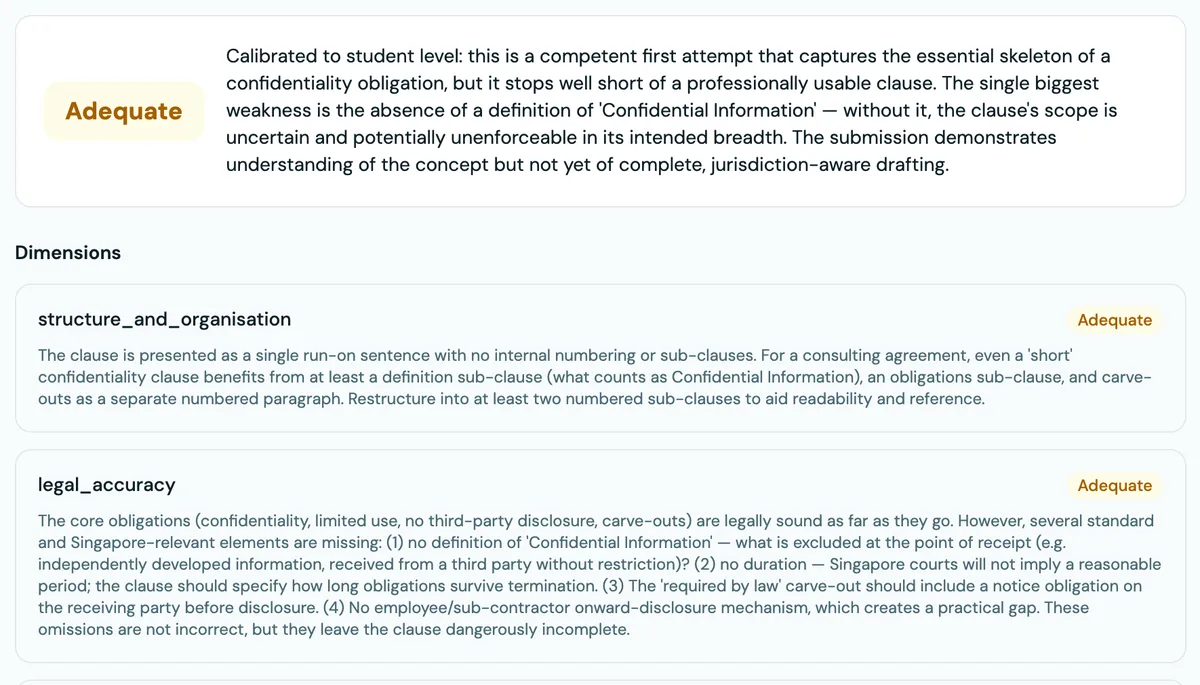
Feedback that says where and why
Every submission comes back scored on each rubric dimension with a written comment, then an overall grade, an overall comment, and concrete suggestions for the next attempt. The rubrics are built on named professional methods rather than generic writing advice - the Completed Staff Work doctrine, IRAC and PCEE, and the chapter method for cross-examination.
Your own calibration
See how your judgment is tracking
Elefant keeps a private record of how often your own calls matched its reading, broken down by category and over recent weeks. It appears once you have made enough calls to mean anything, it counts only - the questions themselves are never stored here - and it is yours alone.
Frequently Asked Questions
The Elefant Suite
Every Elefant product works together. Explore the full toolkit for research, drafting, analysis, and workflow.
Search
Boolean + semantic search in seconds
Learn moreAsk Elf
Converse 1:1 with cited sources + AI
Learn moreCommencements
Track when Acts & Sessions took effect
Learn moreInsights
Your own research team
Learn moreBriefcase
Save, organise, and analyse your findings
Learn moreDrafter
Create legal documents
Learn moreLawmakers
Follow Singaporean parliamentarians. Track speeches, positions, and voting records across sessions and topics.
Learn moreMammoth
Streamline legal requests across the enterprise. Connect business teams, in-house counsel, and outside legal in one workspace.
Learn moreReview
Read a contract from your side
Learn moreCitations
Check every citation before you file
Learn morePlaybooks
Your review standard, reusable
Learn moreClauses
Your organisation's clause bank
Learn moreLearn
Practise, and be graded on it
Learn morePractise the work, not the theory
Pick a practice type, submit an attempt, and see exactly which dimension let it down.